Whether you buy organic or conventional, properly washing your fruit and vegetables is essential to remove soil, bacteria, and residual pesticides.
Here is a simple guide to ensuring your harvest is as clean as it is delicious.
The General Rule: Cool and Constant
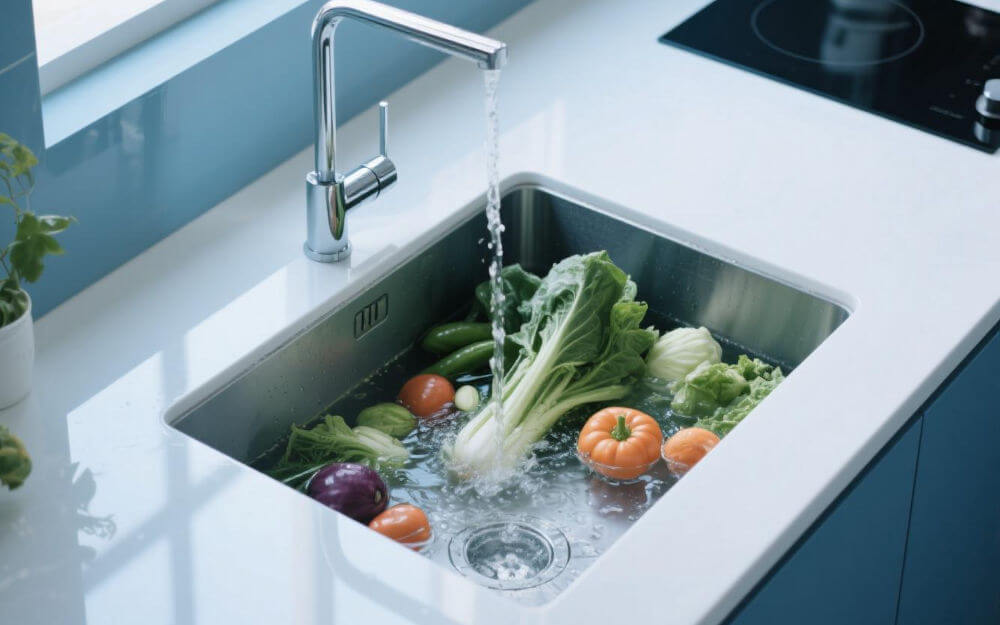
For most produce, cool running water is your best friend. You don’t need fancy commercial “veggie washes.” The friction of your hands under a steady stream of water is often enough to dislodge most surface impurities.
- Dry thoroughly: Always dry your produce with a clean cloth or paper towel. This further removes any remaining bacteria.
- Wash just before use: To prevent premature spoilage and mould, wait until you are ready to cook or eat before washing.
Deep Cleaning Specific Produce
Some fruits and vegetables require a bit more attention due to their texture or how they are grown.
1. Leafy Greens (Spinach, Kale, Lettuce)
These are magnets for grit and soil.
- The Method: Submerge them in a bowl of cold water and swish them around vigorously. Let them sit for a minute so the dirt sinks to the bottom. Lift them out (don’t pour the water over them again!) and use a salad spinner to get them bone-dry.
2. Root Vegetables (Carrots, Potatoes, Beetroot)
Since these grow directly in the earth, they carry a higher bacterial load.
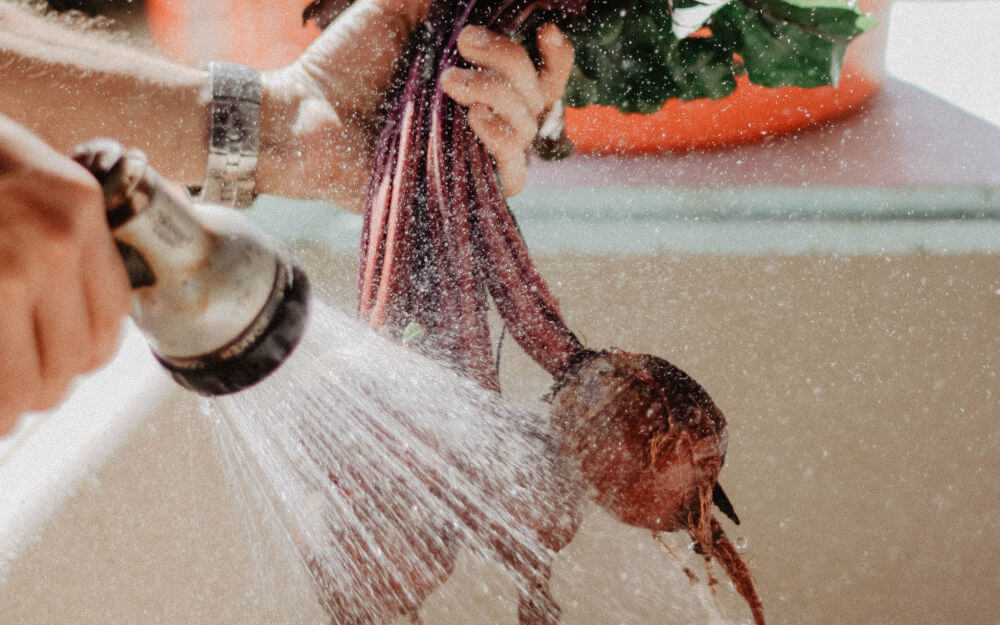
- The Method: Use a dedicated vegetable brush to scrub the surface under running water. This is particularly important if you plan on keeping the skins on for extra fibre.
3. Firm Fruits (Apples, Pears, Peppers)
These often have a natural or added waxy coating that can trap pesticides.
- The Method: For a deeper clean, you can use a solution of one part white vinegar to three parts water. Spray, let sit for a moment, and rinse thoroughly.
4. The Fragiles (Berries and Grapes)
Berries are porous and can easily become waterlogged.
- The Method: Place them in a colander and spray them gently. For berries, a quick soak in a bowl with a splash of apple cider vinegar can help kill mould spores and extend their shelf life—just be sure to rinse and dry them immediately.